AI search has changed how visibility works. Earlier, ranking on Google meant traffic. Now, if tools like ChatGPT or Google AI don’t mention your brand, users may never even reach your site.
This is why AI search monitoring tools are becoming important. They help you understand how AI systems see your brand, how often they mention it, and what content they trust.
Let’s break down the top tools in detail.
1. Nightwatch AI
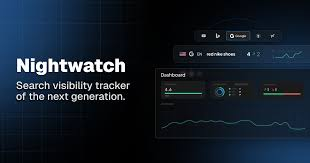
Nightwatch AI stands out because it connects traditional SEO with AI search tracking in a way most tools don’t.
What makes it different is that it doesn’t only show the final AI answer. It actually helps you understand the process behind it. When AI tools generate responses, they often simulate search behavior, pull data from multiple sources, and then summarize it. Nightwatch tracks that entire flow.
So instead of just seeing “your brand was mentioned,” you can understand which queries triggered it, what sources were used, and how your competitors appeared in the same context.
This is very useful for agencies or advanced marketers because it gives a clearer picture of how AI builds answers. You can then optimize your content not just for ranking, but for being selected by AI.
If you are moving from traditional SEO into AI search, Nightwatch is one of the most balanced tools to start with.
2. Otterly AI

Otterly AI is built for simplicity. Many AI monitoring tools can feel technical, but this one focuses on making things easy to understand.
Instead of keywords, Otterly works with prompts. This matches how users actually interact with AI tools. For example, instead of tracking “best shoes,” it tracks full queries like “what are the best running shoes for beginners.”
It then checks whether your brand appears in those AI-generated answers.
One of its strongest features is the “share of AI voice.” This tells you how often your brand is mentioned compared to competitors across different AI platforms. It gives a quick understanding of where you stand in your niche.
Otterly is a good choice if you are just starting with AI SEO and want clear, actionable insights without getting overwhelmed by data.
3. Knowatoa AI

Knowatoa takes a slightly different approach. Instead of focusing only on visibility, it focuses on perception.
It looks at how AI describes your brand. That includes tone, sentiment, and positioning. For example, AI might mention your brand, but it may describe it as expensive, outdated, or not recommended. That matters a lot.
Knowatoa simulates different types of users and queries. It analyzes how AI responds in those situations. This helps you understand how your brand appears at different stages of the buyer journey.
This tool is especially useful for brand teams. If you care about reputation, trust, and positioning in AI answers, Knowatoa gives you deeper clarity than standard tracking tools.
4. Profound AI
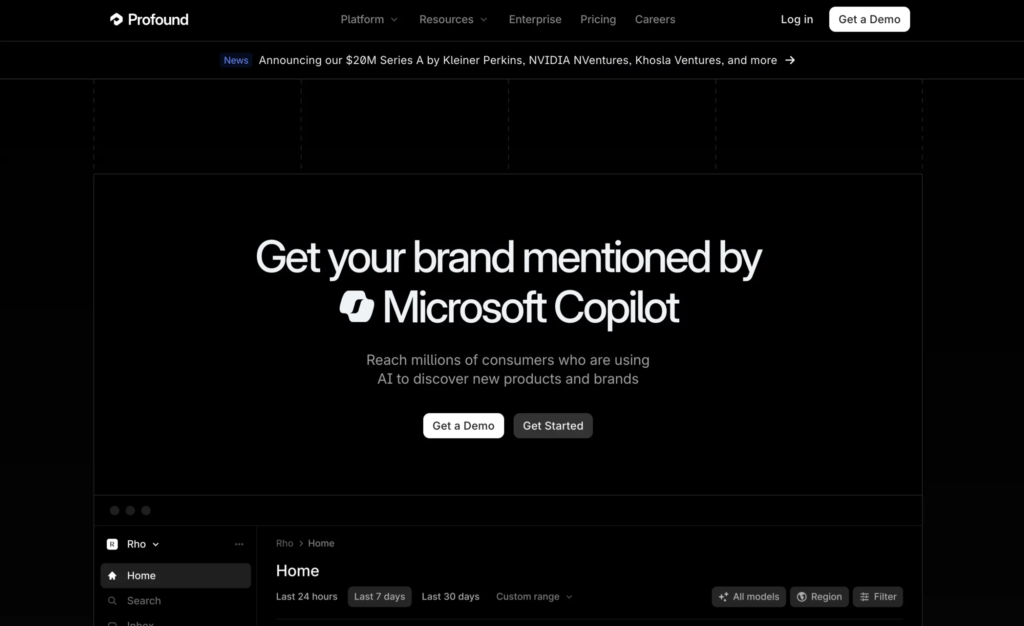
Profound AI is built for scale. It is designed for large businesses that need more than basic tracking.
What makes it powerful is its ability to analyze large volumes of AI queries. It tracks trends across prompts, identifies which topics are gaining attention, and shows how your brand visibility changes over time.
Instead of just tracking mentions, it helps you understand demand. For example, if a certain type of query is increasing, you can create content around it early.
It also provides advanced dashboards that allow teams to track performance across multiple campaigns, products, or regions.
This tool is best suited for enterprises or companies with large marketing teams who need detailed reporting and data-driven decisions.
5. Peec AI
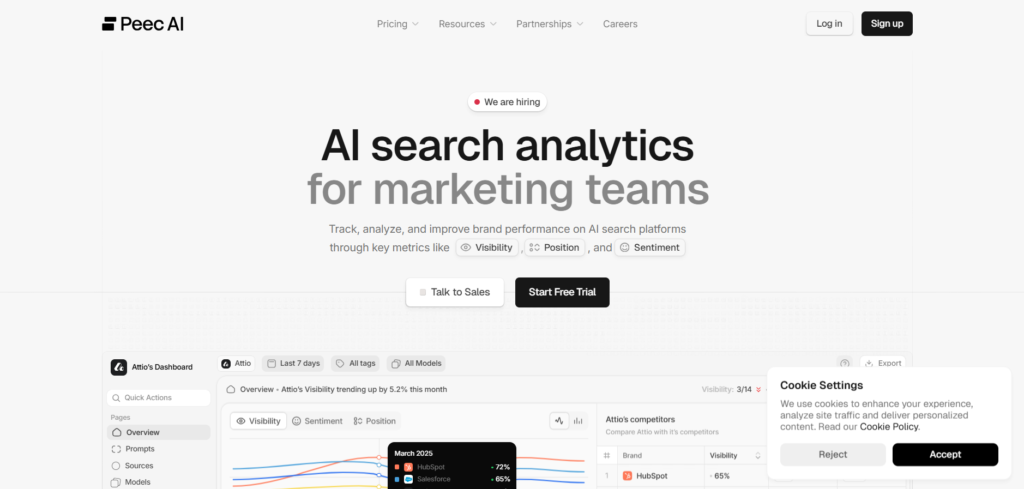
Peec AI focuses on prompt-level tracking, which is becoming more important as AI search grows.
Instead of grouping queries like traditional SEO, it tracks individual prompts. This means you can see exactly how your brand performs for very specific questions.
For example, instead of tracking a general topic like “AI tools,” it tracks detailed queries like “which AI tool is best for content writing in 2026.”
This gives you more precise insights into user intent.
Peec AI also provides recommendations on how to improve your visibility. It looks at what competitors are doing, what content AI prefers, and suggests changes you can make.
It is a strong tool for growth-focused teams who want to move fast and optimize based on real user queries.
6. Rankscale AI
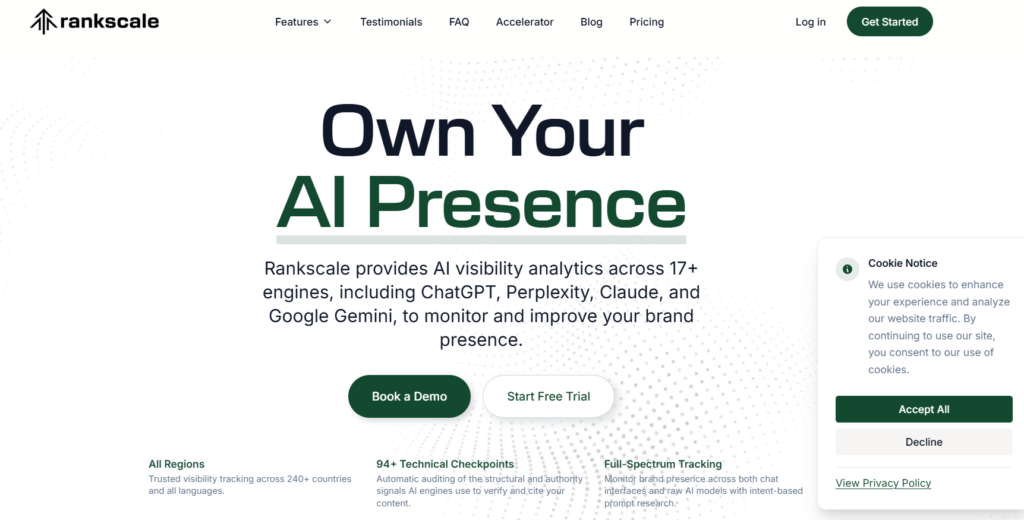
Rankscale AI simplifies AI visibility into measurable scores.
One of its key features is the “AI readiness score.” This score reflects how well your brand is positioned in AI search. It considers mentions, sentiment, frequency, and competitor comparison.
Instead of analyzing multiple reports, you get a clear number that shows whether your presence is improving or declining.
It also tracks data daily, which helps you see trends quickly. If a competitor suddenly starts appearing more often in AI answers, you can detect it early.
Rankscale is useful for agencies and performance marketers because it makes reporting easier. You can show clients clear improvements using simple metrics.
Read: Strategies to Improve Brand Visibility in AI Search Engines (2026 Guide)
7. Semrush AI Toolkit
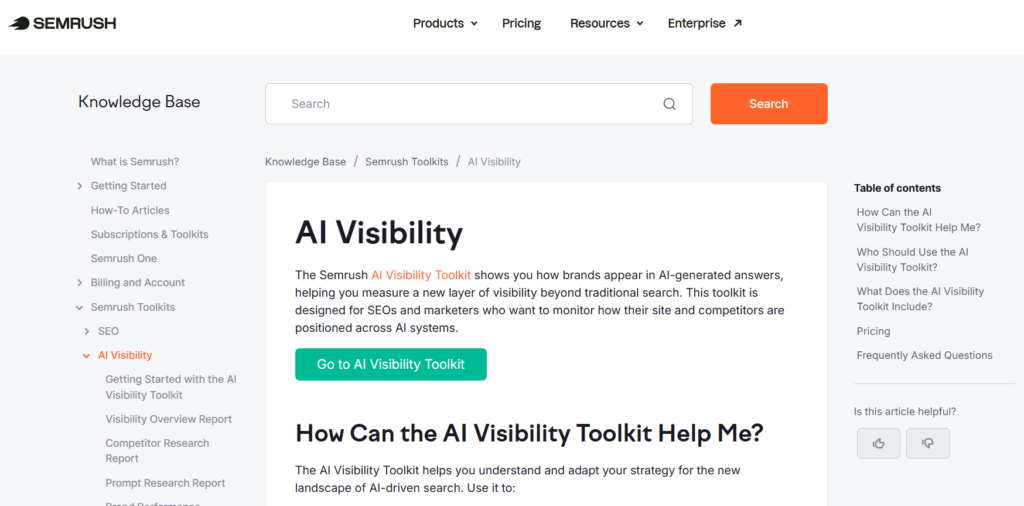
Semrush is already a strong SEO platform, and its AI toolkit extends those capabilities.
The biggest advantage here is integration. You don’t need to learn a completely new tool. You can track AI visibility alongside your existing keyword rankings, backlinks, and traffic data.
It also connects content optimization with AI performance. If your content is not being picked by AI, Semrush can suggest improvements based on structure, relevance, and authority.
This makes it easier to align your SEO strategy with AI search behavior.
If you are already using Semrush, adding the AI toolkit is a logical step. It keeps everything in one place and reduces the need for multiple tools.
8. Scrunch AI
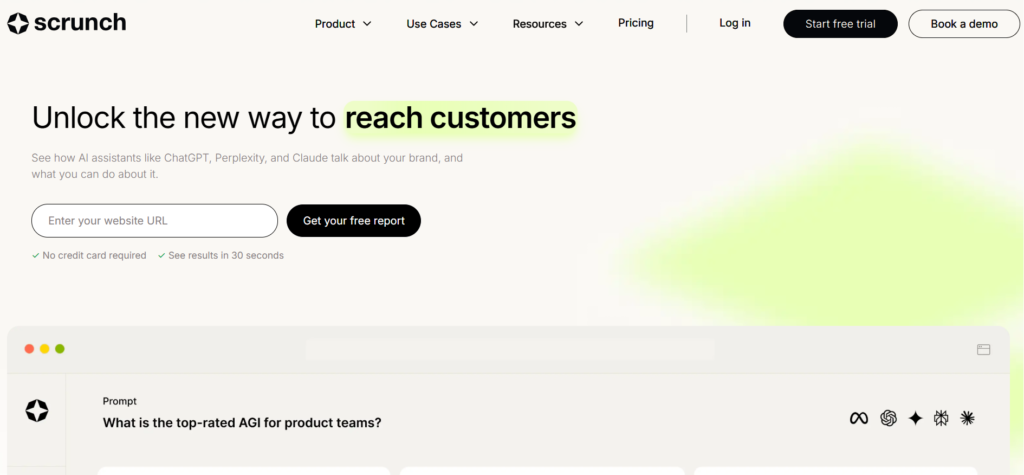
Scrunch AI focuses on how AI interacts with your website.
Instead of only tracking mentions, it analyzes AI bot behavior. It shows which pages AI tools are accessing, which content they use, and which pages they ignore.
This is important because AI systems don’t treat all content equally. They prefer structured, clear, and authoritative pages.
Scrunch helps you identify which parts of your site are working and which need improvement.
It is particularly useful for content teams and technical SEO experts who want to optimize their site specifically for AI consumption.
9. SE Ranking (AI Features)
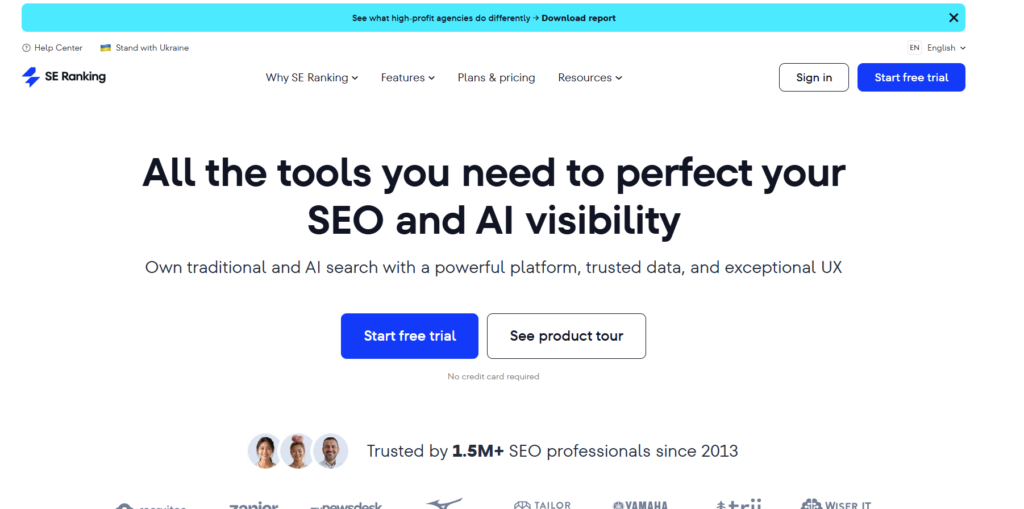
SE Ranking is a more affordable option that now includes AI tracking features.
It combines traditional SEO tools like keyword tracking and audits with basic AI visibility insights. While it may not be as advanced as dedicated AI tools, it still provides enough data to understand your presence in AI search.
For small businesses or freelancers, this can be a good starting point. You don’t need to invest heavily, but you still get exposure to AI monitoring.
It works well if your focus is still mostly on SEO, but you want to slowly adapt to AI search.
10. BrandLight / Amadora AI
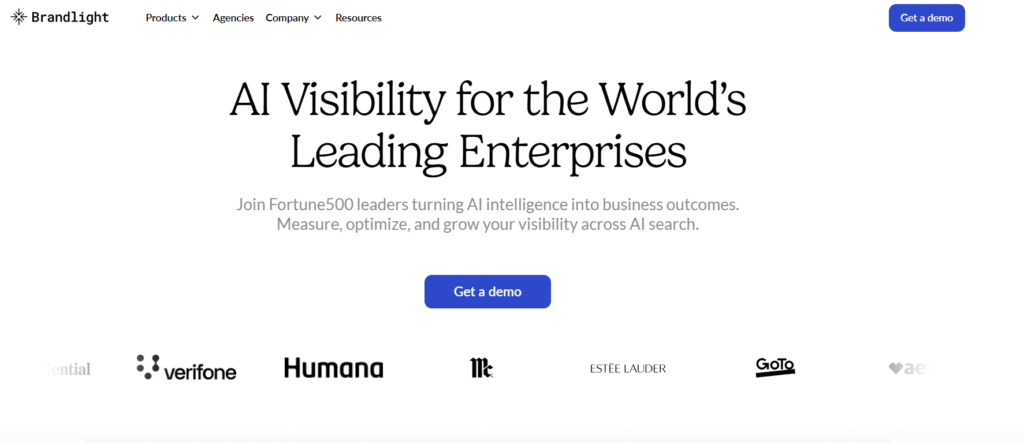
These platforms are built for analytics and reporting.
They focus on high-level insights like share of voice, competitor comparison, and overall performance across AI platforms.
Instead of diving into individual prompts, they give you a broader picture. You can see how your brand compares to others in your industry and how your visibility changes over time.
They also offer strong reporting features, which is helpful for agencies managing multiple clients.
If your goal is to present clear data, track performance across teams, and make strategic decisions, these tools are very useful.
Final Conclusion
AI search monitoring tools are not just an upgrade to SEO tools—they represent a shift in how visibility works.
Earlier, the goal was to rank on page one.
Now, the goal is to be included in AI-generated answers.
Each tool has its own strength:
- Nightwatch connects SEO with AI
- Otterly makes tracking simple
- Knowatoa focuses on perception
- Profound handles large-scale data
- Peec tracks real user prompts
- Rankscale simplifies performance
- Semrush integrates everything
- Scrunch analyzes AI behavior
- SE Ranking offers affordability
- BrandLight focuses on reporting
The best approach is not to rely on one tool blindly. Start with one based on your needs, test it, and then expand.